
iRUN COMMUNITY SUMMERTIME JAM


MICHELLE AND KIM KREZONOSKI

Dream big
On Hard Work, Big Attitude, the new adidas Adizero Boston 13 and the Ultimate Summer Workouts for Fall
Photographs by Josh Tenn-Yuk, Words by Ben Kaplan
Every life involves pace changes and new finish lines and Kate Van Buskirk, chasing big dreams always, says her goal, after qualifying for another Canadian Worlds team, is to run the 2026 Boston Marathon as an elite racer with her father.
For her dad, on his seventieth birthday, he’ll be returning to Boston for his sixth time.
Kate, one of our three elite athletes we had test the new adidas Adizero Boston 13 shoes for this cover story, grew up idolizing her dad and watching him run.
“I didn’t know what the Boston Marathon was, but I knew it was a big deal because it was a big deal to him,” Kate told us at a workout at Central Tech, where she test drive the new adidas Adizero Boston 13s and was thrilled to watch a young girl’s team tackle hurdles. “My earliest memories of my dad are of him coming back from these long runs in January with his beard full of icicles and I remember thinking, ‘I don’t know what this is, but it’s bad ass.’ I love it.”
Kate followed her dad’s love of running into her own professional career, racing track at Duke University, medalling in the Commonwealth Game and running for her country at the World Championships. At 9-years-old, alongside her father, she watched Donovan Bailey win the 100-metres at the 1996 Olympic Games.
“I turned to my dad and said, ‘One day I’m going to the Olympics,’” Kate told iRun with a laugh. “Twenty-five years later I made it to the Olympic Games.”


running should complement your life, and not be the centre.
Kate wore the Adizero Boston 13s in her workout and felt like she’d found her new favourite shoe. “I loved the Boston 13’s from the moment I stepped into them,” she said. “The locked-in tongue and lightweight upper hugged my foot perfectly. They’re well-cushioned and have enough substance to stand up to long training sessions, but felt incredibly light and fast once I got turning over.”
Kate’s turned things over more than most and says she’s not ready yet to give up on her big running dreams. She spent more than two decades chasing the Olympics and understands what it means to give racing her all. But there’s a wisdom that’s come with her years of running around the globe for her country. It always comes back to her love of the sport.
“Racing got me to travel the world and understand different cultures and introduced me to my most enduring friendships and taught me to work hard, fail and keep my dreams alive,” she says. “I know I’m still capable of running a faster marathon and I want to be part of the elite field at the 2026 Boston Marathon.”
The Boston Marathon also weighs heavily in the lives of Michelle and Kim Krezonoski, twin sisters with type A personalities and the drive of heavyweight fighters. Relentless, outspoken and loyal to each other as training partners and best friends, the two 31-year-olds aim to run their 2025 marathons — in Chicago and Valencia — in under 2:35.
“Running is hard, but it brings a certain feeling of peacefulness when you can fit in a morning run before a workday,” Kim told iRun after a workout along Toronto’s MGT. “The life lessons it teaches you about failure and challenging your limits are translatable throughout all aspects of life.”
Both sisters are elite athletes and run coaches with demanding jobs and high expectations for themselves and for each other, but each of them confessed that their running improved when they became less — not more — rigid. Running well, reaching a PB, for the Krezonoski sisters, became synonymous with living well as their race times improved.
They told iRun that summertime training is optimized by finding the joy in each workout, each run. Michelle had to learn that lesson the hard way.
“I used to think that if I wasn't running hard every day and pushing myself that I wasn't getting better, but there’s such an importance of alternating between easy and hard days,” she says. “I also used to think that in order to be hitting my goals, I had to centre my life around running, when reality is, running should complement your life, and not be the centre.”
Prior to the 2024 Boston Marathon, Michelle suffered a torn Achilles and had to miss eight weeks of training. Unbeknownst to her, that break from running reignited her passion for the sport.
“I had to find joy in other activities, and once I did, I was happy and came back strong to finish twenty-third at Boston that year,” she says, with the kind of smile that every runner recognizes as one that says: I can still run faster.
do the best you can with what you have.
Alex Cyr, who spent much of 2025 trying to break thirty minutes in his 10K, knows that he can still get faster. Once he broke his 10K PB, he told iRun, he immediately started reaching for new 5K and half marathon PBs.
He broke down his tremendous success in our sport to three things.
“When making your training plan, choose your goal race and work backwards: I like my plans to last between 12-16 weeks,” Cyr told iRun after demoing the Adizero Boston 13s and adding that, when choosing your race this fall, to pick one that excites you.
“That way,” he says, “you will stay motivated even on the hardest days.”
Perhaps Cyr’s best tips, borrowed from Jack Mullaney, head coach of the professional running group NAZ Elite, is: “It's never all or nothing. It's always something.”
Cyr says that quote helps him balance his running with his busy life as a health & wellness columnist at the Globe & Mail. “It means, ‘do the best you can with what you have,’” says Cyr, then explains how he applies it in his own training life: “On the days when life gets in the way of training, don't get discouraged — do the best you can with what you have. If you only have time for ten pushups, do those ten pushups. Then, get back on track the following day.”
Track workouts for Cyr include threshold repeats at a sustained effort at the pace that you can hold for about an hour. So, depending on your level, that might be your 10K pace, or even closer to your half-marathon pace. Another way to think about it is the pace that's too fast for conversation, but that allows you to mutter two to three word answers.

One day I’m going to the Olympics.
“When training for a half-marathon, I usually do two threshold workouts per week,” reports Cyr. “They can be 3x10 minutes at threshold pace with two minutes of rest in between, or 5x5 minutes at threshold pace with two minutes of rest in between. My biggest threshold workout during my last build was: 20 minutes threshold, 2 minutes rest, 15 min threshold, 2 min rest, 10 minute threshold.”
Cyr has worn the Adizero Boston 13s through multiple iterations and the newest version, he says, is his favourite one yet. “The adidas Boston 13 is a workout shoe of the times: carbon-loaded, supercritically foamed, and surprisingly light. I love them for threshold workouts, and pace change runs like fartleks.”
Watching Kate workout is inspiring. She sprints and changes paces and runs so hard and with such abandon that it can’t help but make you inspired by the sport. She says the Adizero Running Gel Pocket Crop Top left her feeling fit and eager to fly.
“I was surprised by how sleek and supportive it is,” she says, “It fit me like a glove and I loved the thoughtful features: the small zippered key pocket, mesh side pocket for gels and back phone pocket meant that I can literally have everything I need on me during my workouts.”
Kate’s worked out certainly more than most and says she’s not ready yet to give up on her big running dreams. She spent more than two decades chasing the Olympics and understands what it means to give racing her all. But there’s a wisdom that’s come with her years of running around the globe for her country. It always comes back to her love of the sport.
“Racing got me to travel the world and understand different cultures and introduced me to my most enduring friendships and taught me to work hard, fail and keep my dreams alive,” she says. “I know I’m still capable of running a faster marathon and I want to be part of the elite field at the 2026 Boston Marathon.”
Kate’s dad, who influenced her with his training all those years ago, will be lining up at next year’s Boston to celebrate his seventieth birthday. Inspired, she says, by Malindi Elmore and Natasha Wodak, Kate says plans on racing there as an elite on his big day.
“My dad’s run Boston at every milestone in his life,” she says, “and I want to celebrate his legacy at the finish line — getting better, getting faster and loving my running even better, with age.”


Getting better, getting faster and loving my running even better, with age.


Honouring the 45th Anniversary of Terry Fox’s Marathon of Hope
By Danyael Halprin

It’s indeed a testament to Terry Fox’s loving family, the Terry Fox Foundation, and communities across the country for keeping Terry’s legacy alive forty-five years after the Marathon of Hope. And because it’s a big milestone, many events are taking place and commemorative items are being unveiled throughout the year, including a new movie produced from 90 rolls of 35mm film of never-before-seen footage from Terry’s historic run, for a possible fall release.
Many of us remember watching 21-year-old Terry of Port Coquitlam, BC, on our television sets as he ran along the highway day after day for 143 days on his Marathon of Hope. Much has changed since those days of the clunky TVs in the 1980s, but one thing has not — the disease still exists, and because it has touched each of us in some way, it is an unfortunate commonality that binds us.
In 1979, two years after Terry was diagnosed with osteogenic sarcoma (bone cancer), he began learning how to run with an artificial leg and told his parents that he was training for the Vancouver Marathon the following May. But it was after completing a 27-kilometre race in Prince George in September that he confessed first to his mom in the kitchen that he wasn’t in fact training for the Vancouver marathon, but rather to run across Canada to raise money for cancer research.

“Mom, not only people in BC get cancer, people right across the country do and I need to start in Newfoundland.”
His mom, being protective, suggested he run only through British Columbia. Regales Fred, Terry’s older brother by 14 months: “Terry said, ‘Mom, not only people in BC get cancer, people right across the country do and I need to start in Newfoundland.’ ”
While there have been significant advances in cancer screening, treatment and survival rates — and the Terry Fox Foundation alone has raised $950 million to date in support of 1,300 cancer research projects — now more than ever, it’s important to finish the work that Terry started.
Everyone in Terry’s immediate family has carried his torch, and for many years Fred has been traveling in Canada and overseas speaking to volunteers, schools, communities, and NATO bases. This year for the first time in three years he’ll be home in Maple Ridge, BC, to run its Terry Fox Run on September 14.
Fred, 68, says even though today’s children didn’t grow up with Terry Fox, they all know who he is. His story is part of the schools’ curriculum and the message is the same: “Terry was just an average, ordinary Canadian kid, not the best athlete, not the best runner, not the best student in class,” says Fred. “I saw his determination and never-give-up attitude all the time.”
This year’s National Terry Fox Run takes place on September 14 and it’s at these volunteer-organized runs where one truly gets all the community feels. Canadians of all ages and abilities coming together in a friendly, reflective and non-competitive atmosphere with the singular, shared goal to find a cure for cancer. To find a run in your area, go to run.terryfox.ca


That is why the Foundation’s commitment to end cancer is etched on the 2025 anniversary T-shirts. Orders of the ‘Finish It’ collection were mailed out on April 12, the day in 1980 when Terry began his Marathon of Hope in St. John's, NL, where he dipped his artificial leg in the Atlantic Ocean.
The shirts are a national initiative, and each year’s design has become a collectible in its own right. The 2014 shirt displays Terry's first diary entry on Saturday, April 12, 1980: "Today is the day it all begins," and pictured on the back is the bottle of water that Terry filled at the Atlantic Ocean with the inscription: "The Pacific gets closer every day."
He’d planned to pour the seawater into the Pacific Ocean at the end of his run.
The 2021 shirt reflects Terry's Métis heritage. The 2022 shirt was designed by Douglas Coupland and worn by celebrities like Sarah McLachlan, Michael Bublé, Catherine O'Hara, and Sidney Crosby. And of course, there’s Terry Fox's iconic 1980 Marathon of Hope shirt.
Speaking of bringing 1980 back, the Terry Fox Foundation collaborated with adidas Canada for the July 3 release of the iconic Orion shoe that Terry wore during his Marathon of Hope. (This shoe was first released in 2005 and again in 2020). adidas sponsored Terry on his run, providing him with twenty-six pairs over the course of his 5,000+ kilometres.
Today, the shoes are intended for streetwear, not high-performance.
“Runners are blown away that he ran all those miles in these shoes.”
%20-%20Credit%20Postmedia.jpg)
“Runners are blown away that he ran all those miles in these shoes,” says Martha McClew, COO of the Terry Fox Foundation. “And he also had an artificial leg that wasn’t intended for running and weighed about twenty-pounds with its leather parts and the huge plastic bucket that his leg stump constantly bled into.”
The limited-edition navy blue and white shoes feature the name "Terry Fox" in gold stitching, and each pair comes with one of six different shoelaces inscribed with a quote by Terry. As well, the shoebox tissue paper is imprinted with the letter that Terry wrote to Adidas. Few sizes of the Orion shoe remain available on the adidas adidasCanada website or www.terryfox.org, and 100 percent of sales goes to cancer research projects across Canada.
“Terry’s spirit was fierce and he was relentless,” says McClew, who’s worked for the foundation for thirty-six years. “I look at the world and I think, ‘We need more of that.’ Canadians still love Terry Fox because he embodied everything we want to be. All the best parts of a human existed in him.”
Hundreds of community runs will be held across Canada on September 14, 2025, to raise money for cancer research. Here are some additional anniversary events:
The Mount Terry Fox Trek
Valemount, BC, August 16, 2025. Check it out here!
Sleeping GiantProvincial Park
Thunder Bay, ON, September 1, 2025. Terry’s sister Judith and brother Fred will lead a special hike through the park where the rock formation sits near the exact spot Terry was forced to stop running on September 1, 1980. Check it out here!
Confederation BridgeTerry Fox Run
PEI across to New Brunswick, September 21, 2025. Fred Fox will be doing the run, which only happens every five years. Check it out here!
%20iRun-Summer-MBDM-1920x1080-No-Distance.png)


The Kenyan Guide to Racing Happy

Justin Lagat reports from his training in Kenya’s Rift Valley to convey a joyful message to Canada

Photographs and story by Justin Lagat
“To win is not important. To be successful is not even important. How to plan and prepare is crucial. When you plan very well and prepare very well, then success can come on the way. Then winning can come on your way.”
This is one of the famous quotes from Eliud Kipchoge, one of the Greatest Marathon Runners of all time.
In some of the world’s major marathons, like the London and New York City marathons that register more than 50,000 runners at every edition, it is just one runner who will emerge victorious at the end. But, interestingly, each runner who finishes behind the winner, up to the last finisher, crosses the finish line triumphantly as though they are the winners.
Running is not merely about winning the race; there is so much to enjoy in the whole journey of training for a race, even before reaching race day.
Besides health and fitness, and prize money (for the elites), runners have many other personal goals. That is why, hours after the medal ceremony is over, runners still pour across the finish line, emotional, smiling, and even crying with joy.
People who are new to running, or those who don’t run, often view running as a challenging and pointless activity. They don’t get why runners seem to become runners for life. Or, why they feel part of a global family of runners and develop a cycle of friends within and outside their countries.
But then, as Willbur Glenn Colaco puts it: “bees don’t waste their time explaining to flies that honey is better than shit.” Seasoned runners find running an essential and enjoyable part of their lives.
Below are some of the reasons why runners in my hometown love what we do.
1
Running is fun!
No one tells the benefits of running to a well-fed calf, an excited dog who meets their owner after being away for a while, or a gazelle that has had enough of good pastures. They instinctively begin running around in excitement. Before it became a sport, running began as an instinctive enjoyment for humans, too. For the last ten years, there’s been one lady who has been slowly gaining popularity in Kenya for consistently outperforming younger runners in local races. She doesn’t care about winning any prizes as she knows that she is, after all, too old to stand a chance against runners who are three times younger than her. Priscillah Biwott, 60-65 age category runner, completed the challenging high altitude Eldoret City Marathon last year. “All I want is an opportunity to go out and run marathons. I don’t care about the prize money since I have always enjoyed running since my childhood,” Biwott, who won gold for Kenya at the African Masters championships in Pretoria, said. She also won her age category at the BTC Francistown Marathon in Botswana in April 2025.
2
Running is one of the most cost-effective ways to stay active, maintain good health, and stay fit.
In terms of financial implications, running is the cheapest sport and hobby. All one needs is a pair of running shoes. The trails, roads and community track facilities are available to use freely. The trend is now changing in Kenya, but running barefoot was the norm in the recent past. I recall that in my primary school, which had almost 500 pupils, there was only one boy in the whole school who had access to shoes. He was the headteacher’s son. We had a nickname for him, which can be roughly translated as: “the shoe wearer.” So, it's even possible to start running without shoes! The benefits of a hobby, both physically and mentally, are numerous. Running or jogging offers the best value for money among all the hobbies in the world.
3
Running brings a sense of belonging to a community of runners.
As I participated in my first Zoom meeting with fellow ambassadors for the 2025 Philadelphia Race Weekend, I experienced a strange sensation that made me feel part of the group, and the faces on the screen seemed somehow familiar to me. It then dawned on me that, globally, there is a way in which runners talk, walk, appear and tend to regard one another as a family. In the many years of my being part of the fraternity of runners here in Kenya, I can easily tell a runner by glancing at a stranger whenever I come across them. From instances where we have usually come together as a body of runners in hard times, random runners offering to secure our bags when we go out to run in local races, a runner who was on other official errands asking for a running kit when he came across us about to start our run to join us, some running friends who have hosted me in Canada and the U.S. while attending races there, among others, I am proud of belonging to this community.

4
Running keeps you energetic and young.
Several studies indicate that runners are biologically nine to twelve years younger than their peers. Being ten years younger than you should be means a lot in life. It means you can walk and work more effortlessly than your peers, resulting in more productivity at your workplace. The diseases that come with age will wait ten more years.
Unlike in other sports, runners over 80-years-old continue to participate in marathons and ultra-marathons. 83-year-old Johannes Mosehla from South Africa completed the 2025 Comrades Race, a 89.98 km race, in 11:47:27. “The most important thing in athletics or any sports is training and the love of what you do, as well as the enthusiasm to reach your goals,” Johannes Mosehla, who plans to come back again next year, said after the gruelling race, a smile on her face.
5
Running is all about goals.
One of the popular running apps' slogans is: “Beat yesterday.” The pursuit of personal bests, travelling, and participating in various marathons is what keeps many runners happy and fit. Even before race day, runners use various parameters to gauge their fitness and determine if they have improved. Completing a 35K run for the first time in a year is a reason to celebrate. Your GPS watch telling you that you've increased your VO2 Max, or Strava telling you that you hold a course record in one of the routes you train on, are some of the things that make running fun. Every day is a new opportunity. It’s good to have new finish lines: keeps you engaged.
6
Running can get you paid.
If Garmin Connect tells you that your fitness level is in the top 1% of your age group, below are some things you can enjoy as a runner:
Elite runners receive additional rewards for putting in a little extra effort in their running than the typical population of runners. These include competing in major races, winning prize money, securing endorsements from running-related companies and winning medals for our countries at the major championships. These successes can lead to lucrative jobs in national and international sporting federations, recognition and titles from their governments, as seen with Sir Mo Farah after winning medals for Great Britain, among other benefits.
STYLE 💅 PACE 🏃🏿♀️


My wife and I run every day at our home in Kenya, and the pleasure we get from our sport we love to share with the world. My wife will be coming to Canada this fall to race in a few races.
Style by the Mile
STYLE 💅 PACE 🏃🏿♀️
How–and why–runners are working personal style into their running looks. By Karen Kwan
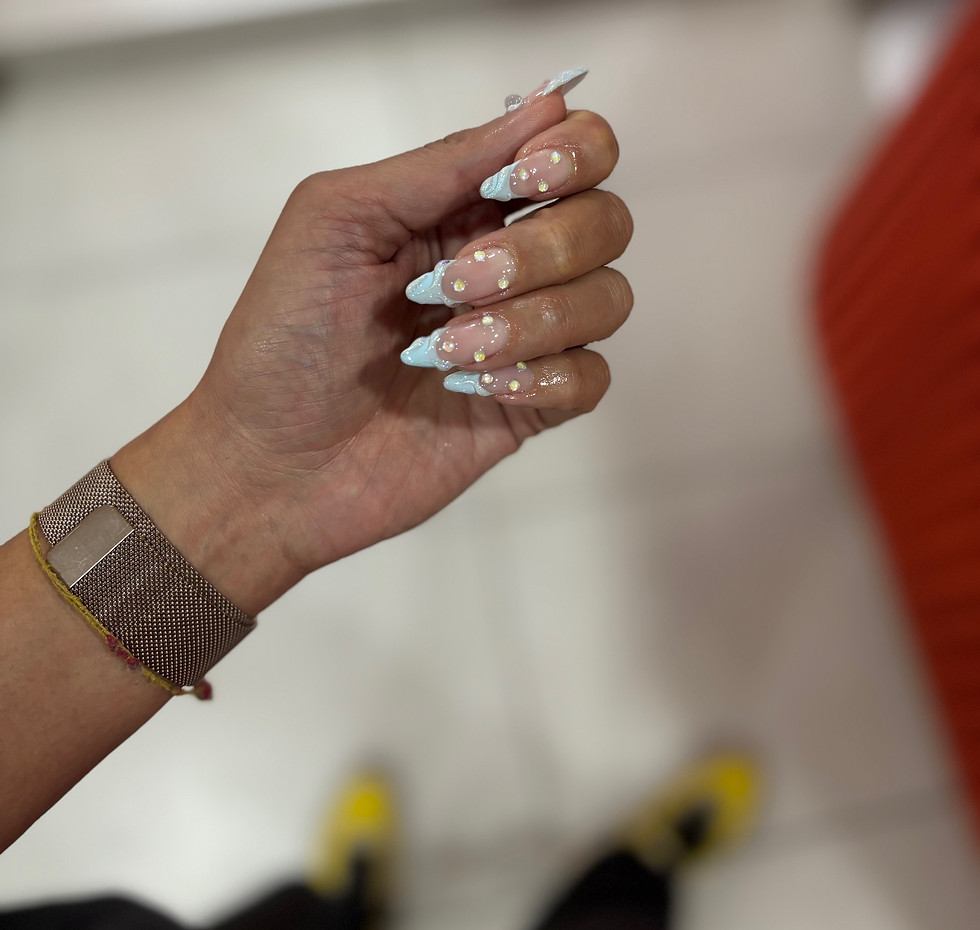
Marathon nails have been part of my race day look for years–elaborate nail art from the best nail-art pros at Tips Nail Bar in Toronto (a couple of favourite looks include one manicure that featured a hidden Nike swoosh over four of my nails and another featured bold pop art inspired by Roy Lichtenstein’s work). My nails complete my marathon outfit–and let’s face it, I have plenty of time to admire my manicure as I slog through 42.2 kilometres.
I pay similar attention to my outfit for days that I’ve got speedwork on my schedule, gravitating to the pieces in my wardrobe that have a more flattering neckline or streamlined cut.
But is it more than just pretty nails and a well-placed design detail at play here? Studies into the neuroscience of beauty shows that the aesthetic experience can contribute to happiness and pleasure, and that the human appreciation for things that help us survive, such as food, is at the root of this. We all know that so much about running is mental, and fashion and style could be feeding into that. With more and more runners treating the streets and trails as personal runways, iRun checked in with a few stylish runners to learn more about their running style and how it impacts their mojo.
Leaning into the fun and joy of running

LEAN INTO IT!
Olympian Alexi Pappas uses style to lean into the moment when it comes to running and racing. Performance is prioritized—trail shoes have to have proper grip and clothes can’t be chafing—but beyond that, she’s been known to throw on a fun t-shirt for her second short, easygoing run of the day as a reminder to herself to take it easy.
For race day, when she often site-guides for major marathons with Lisa Thompson, the two often wear matching outfits, which helps them feel empowered and like a real team. “I have always felt more radiant and capable running when my style feels like it honours both me and the day I'm in—the race, the moment, and the celebration that race day truly can be,” Pappas says.
Glitter is now Pappas’s go-to for most races—as is getting her hair done—to tap into the fun of the day. Pappas sees racing as a kind of performance and as a theatre kid, she loves how her “race face” and outfit honour the day.
“It impacts me in all positive ways and makes me feel like I am giving myself a chance to take up space and also add to a group of people all chasing their dream. That is, I am one of many out there, and my unique look is just like one sprinkle on a big cake full of people.”
Going for glittery, girly fun

GO AHEAD, SPARKLE!
For Toronto-based runner Alison Williams, her running look has become more important to her the past few years. “It all started with Alexi Pappas putting glitter on her face and dressing up in a way that felt authentic to who she is. In some ways, seeing that gave me permission to do the same,” says Williams. “Now, thinking about what I wear on the run, especially in a race environment, gives me extra confidence and a chance to express who I am as a person, not just a runner.” Plus, having some fun with her outfit brings a lightness to the race and reminds her that it’s not that serious. You’ll find her often on the course in soft pinks and pastel purples, matching scrunchie in her double french-braided hair and, of course, glitter on her face.
Building on community and representation

If you spot Kortnee Borden out running, he’s usually wearing dark tones and vintage fits–from brand tour merch t-shirts and bandanas to conversation-starting singlets–that display his personal sense of style without compromising performance. A fan of the hip hop and rock music scenes of the 90s and 00s, the Toronto-based runner incorporates the aesthetic from these subcultures, along with his sense of community and BIPOC advocacy into his running look. His running style continued to evolve once he started running with Toronto’s Parkdale Roadrunners (PDRR)–a run crew which initially grew out of interest in a t-shirt reading “I’d Rather Be Smoking” that founders Mike Krupica and Steven Artemiw would wear; Borden knew he’d found his community when he discovered how PDRR brought together different artistic subcultures into the running scene.
Now also a member of a running subgroup made up of about a dozen runners he met through PDRR, the White Orchids, Borden often sports exclusive t-shirts designed by friend and White Orchids member Matt Geofroy, including one that reads, “We Need More People of Colour At the Start Line” (inspired by a conversation they’d had about the need for greater BIPOC participation in races). “This shirt was a statement piece that offered folks an opportunity to engage in a conversation on this important topic,” says Borden. The t-shirt sparked them to launch Crossing Lines, an initiative that seeks to break down barriers for BIPOC folks in the participation of Ultra Endurance running races. “In the first year of Crossing Lines we were successful in getting over 25 BIPOC runners to participate in an ultra race. This is a t-shirt that started a movement.”
EVERYONE WELCOME!
Sporting high fashion as armour

YOU DO YOU!
Style consultant Amy Shio, who’s on a five-year running streak, looks to her running style as armour and uses the process of getting dressed to run to romanticize the moment, rather than making it a chore. “The ritual of putting my style together means more to my mental health than just my physical appearance,” she says. Her non-negotiables? Her ears are always stacked. “I have 11 ear piercings and feel very uncomfortable if any holes don’t have earrings in them,” she says, adding that, for races, she’ll do fun-themed nails. Plus, she’s always got on Chanel Coco Neige collection sunglasses. “I own three pairs meant for cycling, running, and skiing–they don’t bounce and really tie my day-to-day style with my running style,” says Shio.
Shio, who splits her time between Toronto, Los Angeles and Mexico City, says that her hometown singlets are crucial to her. “I’m obsessed with my Team Canada singlet and my Nike Run Club Toronto shirt,” she says. “Representing your home country abroad in the running community is beautiful–they’re always a conversation starter, and you’ll find someone who knows someone because the community is simultaneously large and small.” At a time when people are being mocked for wearing a running vest for every run or super shoes for an easy 5k, I love that runners who are leaning into working their style sense into their running outfits for personal reasons and motivation, even if on the surface their fashion choices might seem frivolous. From joy and authenticity to greater confidence and representation, –there’s so much more to the looks you see runners wearing when you dig a little deeper.


Coach's Corner
Ask Lauren Roberts, PT
The Run Program Director of Athlete’s Care offers everything you need for fall finish lines
Summer’s in full swing which means your fall race is only a matter of mere months away. But fret not. Lauren Roberts, the Running Physio and Guru of Everything Sneakers, answers your need to know questions on how to get yourself ready for the season ahead.
Q
What risk does training too much in the summer pose for a fall race and how best can we go about finding our training sweet spot?
A: Lauren Roberts: Summer training can be so much fun! Social run groups are at their peak and brunch patios are bustling. The biggest problem tends to be inadequate fueling and hydration. Many people will complain of having a sensitive stomach or experience the dreaded “Runner’s Trots.” While this definitely is an issue, it’s important to know that the smooth muscles of our gut can actually adapt over time. I recommend ensuring a good carb-rich meal the night before a long run, and fueling with a carbohydrate of choice every 40-50 minutes during training. Start with something easily tolerated and in small amounts, and then gradually work up to 70-90 grams-per-hour.
Q
Is there a rule of thumb for the average amount of weekly kilometres necessary for half marathon training? How about the marathon?
A: Absolutely. Half marathon training requires weekly mileage no lower than 15K-per-week to start and reaching 40-50K-per-week at peak. To marathon train properly, you should already be comfortably running around 50K-per-week at base. Peak should be no less than 70 kilometres-per-week. More mileage has been associated with speedier times, but mileage over 65K-per-week is also associated with greater risk of injury, which is why marathons are no joke and should be approached with respect and patience.
Q
How might things like meditation help runners, and how could someone unfamiliar with that learn how to start?
A: Great question. In my opinion, running is its own type of moving meditation. A lot of people who get into distance running have their own personal reasons for it—and often anxious people find a certain “release” with running. The ability to find a place in your mind that can view all emotions and feelings in a neutral, curious, and non-judgemental way will prove useful in a race. A strong runner won’t get bogged down by any one feeling at any one time, and can mentally and physically remain present in the moment and at the same time have a macro, big-picture perspective of the race as a whole.

Q
Does every runner need shoes with a carbon plate?
A: NO!! In fact, if you have history or are currently dealing with shin splints or foot and ankle issues (tibialis posterior, Achilles tendonopathy or plantar fasciitis), you should most definitely not be in a carbon plated shoe. As well, the energy return gains are more evident at faster speeds. Research has confidently concluded that at speeds much less than 16 kilometres-per-hour (~4:45-4:50-per-kilometre) there’s no real improvement compared to a non-speed shoe. Go and get a Running Analysis by one of our certified Runner’s Program practitioners at Athlete’s Care first!
Q
What have you learned over time to produce faster race times and what have you learned is a surefire way to screw everything up?
A: LR: Faster race times are a perfect balance between pushing and pulling. We all know “recovery” is important, but the things that actually impact good recovery are often not front of mind. It’s been found that runners who scored lower mental health questionnaires for anxiety or depression are more likely to be injured. And, high mileage runners (70+ km per week) who sleep less than 9 hours per night have shown the same. So yes, foam rolling and massage guns can feel good, but things like life stress and sleep have to also be in shape for you to perform your best. Neglecting the basics will absolutely ensure a poor performance.
Q
Can you talk a little about running and aging? Is there a point past which it's impossible to PB?
A: I recently treated a 73-year-old triathlete. Are his times slower than 20 years ago? Yes. Is he still winning his age group? Yes. Moreover, race times aside, we know that things like meniscus thickness (the cartilage in your knees) and bone density tend to be better in long-time runners; the opposite of what many people think. Loading your skeleton repeatedly over time doesn’t “wear it out”—it strengthens it. There are also many stories of women who have come back after having babies and are even faster than beforehand. In my opinion it’s because moms are superheroes of time management, but I’m probably a little bit biased!

Q
Of course every body is different but, as a rule of thumb, past 50, does running 100K weeks produce diminishing returns or does that strengthen everybody?
A: In general, running more does equate to better race times, but not improved strength. More time spent running will decrease the catabolic work of strength training. As I mentioned, we do know pretty clearly that over 65K-per-week increases the likelihood of injury, but interestingly enough older runners tend to experience less injury. It’s possible that many runners have just stopped running at this point because of injury which would skew these results, but it’s also possible that athletes running for so much of their life have just become extremely resilient to injury.
Q
What’s one stretch we should do everyday and one stretch we should never, ever, ever do again?
A: Stop touching your toes to stretch your hamstrings! This is 75% low back flexion and 25% hamstring length. Please do some form of bridging every day to keep your glutes strong and your hip flexors long! I know I know…this is an exercise and not a stretch…but that’s just how it goes!
Q
Lastly, for everyone embarking on their fall training, what's a last word of wisdom from you to all of us?
A: Plan your big picture! Don’t choose your runs day-to-day depending on how you feel; have an overarching plan to get you slowly and successfully to the distances you’ll need to be at on an appropriate timeline. And: do not wait to seek help for an injury!! Our clinicians love when someone comes in just with a small niggle. It means we can get on top of it before the compensations start to layer on. Our clinicians at Athlete’s Care all over Ontario are specifically trained in working with running injuries so don’t hesitate to book in.

To book a time with Lauren and meet her instructors at Athlete’s Care, see AthletesCare.com


.jpg)
Fuelled with Joy

Registered Dietitian, Ruth Burrowes Shares Her Take on How to Fuel with Pleasure in Mind with Her Top Three Flavourful Summer Recipes

For me, the two great pleasures of summer are sleepy morning miles along Lake Shore and the first bite of a crisp, cool watermelon after a gruelling long run. Savouring good food–like a watermelon ripened to perfection–hasn’t always been my MO. In my early racing days, I kept flavour at arm’s length, counting bites as obsessively as I counted laps. I believed lighter plates made lighter feet, and enjoying one's food was a luxury I couldn’t afford.
However, this stoic approach to fueling is a slippery slope to under-fueling and burnout. Since becoming a dietitian, I’ve learned how to embrace flavour to fuel better. Eating well isn’t just about meeting nutritional needs; it is also a powerful tool for speeding up recovery and adding enjoyment to the process.
In honour of the Pleasure Issue, I’ve pulled together three of my go-to summer recipes that hit all the right notes: nourishing, simple to prep, and deeply satisfying. These vibrant dishes are the perfect way to add texture, freshness, and a touch of decadence to your plate this season. Whether you’re in the middle of a marathon or rocking your first couch-to-5k, these recipes are a reminder to slow down, savour the season, and celebrate the best of both worlds: performance and pleasure.

Easy & Refreshing Melon Summer Salad
Rooted in Mediterranean simplicity, this mix of summer produce, olive oil, and fresh herbs is the only thing I feel like throwing together on a hot summer day. It’s bright and bold, yet perfectly balanced by the contrast of sweet melon, crisp cucumber, and acidic tomato. Plus, the protein-packed feta and healthy fats from the olive oil make it a deceptively satisfying dish. Whether you’re hosting brunch or casting around for a refreshing recovery meal, this salad deserves a permanent spot in your summer rotation. Serves 4–6
Ingredients
-
2 cups cantaloupe or watermelon, cubed
-
1 English cucumber, sliced or cubed
-
1 cup cherry tomatoes, halved
-
250 g feta cheese, cubed or crumbled
-
¼ cup fresh basil
-
Optional: ¼ red onion, thinly sliced
Dressing
-
2 tbsp olive oil
-
1 tbsp red wine vinegar or lemon juice
-
½ tsp honey (optional)
-
salt & pepper to taste
Assembly (Mosaic Style)
-
Cut melon, cucumber, and feta into 1-inch cubes.
-
On a large flat platter or board, arrange the melon, cucumber, tomato, and feta in tile-like sections or clusters on a flat platter.
-
Whisk together dressing.
-
Drizzle the vinaigrette over the top.
-
Fill gaps with basil leaves.
-
Finish with cracked pepper and flaky salt.
Store covered in the fridge for up to 2–3 days. Best served cold and eaten after a sweaty interval session.

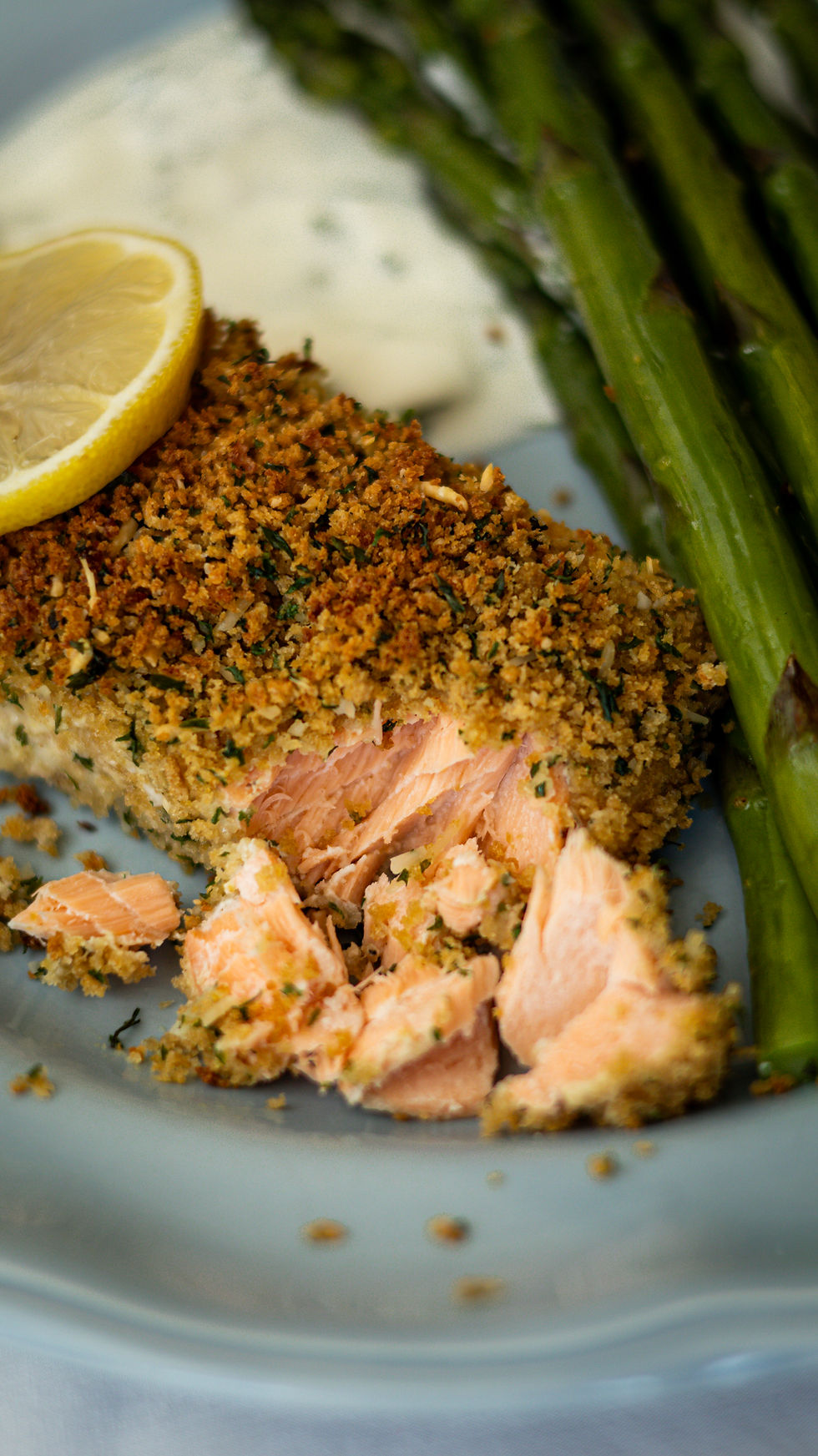
Lemon-Herb Panko-Crusted Salmon
Crispy on top, flaky inside, and on the table in under 25 minutes—this salmon is a tried-and-true crowd-pleaser. Packed with anti-inflammatory omega-3s and roughly 30 g of protein per serving, it satisfies both taste buds and tired muscles. Whole-wheat panko adds satisfying crunch (and a little extra fibre), while lemon zest, garlic, and parsley keep things bright. Plus, the golden crust and mild flavours also make it about as kid-friendly as salmon gets. Serves 5
Ingredients
-
5 salmon fillets (4–5 oz / 115–140 g each), skin on or off
-
1 cup + 2 Tbsp whole-wheat panko breadcrumbs
-
2 Tbsp olive oil
-
Zest of 1 lemon + juice of ½ lemon
-
1 small garlic clove, finely grated or minced
-
2 Tbsp dried parsley
-
2 Tbsp finely grated Parmesan (optional, for extra umami)
½ tsp salt + ¼ tsp black pepper -
1 Tbsp mayonnaise
-
1 Tbsp Dijon mustard
Instructions
-
Heat oven to 425 °F / 220 °C and line a baking sheet with parchment or foil.
-
In a small bowl, combine panko, olive oil, lemon zest and juice, garlic, parsley, Parmesan, salt, and pepper. The mixture should feel slightly damp.
-
Pat salmon dry. Stir mayo and Dijon together, then lightly coat the top of each fillet to help the crust stick.
-
Press the panko mixture onto each fillet to form a thick, even layer. Place salmon on the prepared sheet and give the tops a light spritz or drizzle of olive oil. Bake 12–14 min, or until the crust is golden and the fish flakes easily with a fork.
-
Serve it straight from the sheet pan alongside grilled veggies, a little extra lemon, and your favourite tzatziki.
Leftovers keep well, covered, in the fridge for up to 2 days and is perfect flaked over a salad when you’d rather skip reheating at work.
Espresso Recovery Popsicles
Equal parts treat and recovery tool, these creamy espresso popsicles are what iced coffee wishes it could be. Made with Greek yogurt, sweetened condensed milk, and real brewed espresso, they deliver a hit of protein, quick carbs, and just enough caffeine to perk you up post-run or power you through an afternoon slump. Makes ~4 popsicles
Ingredients
-
¾ cup full-fat (5% MF) Greek yogurt
-
¼ cup brewed espresso or strong coffee, cooled
-
¼ cup sweetened condensed milk
-
3 Tbsp maple syrup
-
2 Tbsp skim-milk powder
-
Pinch of salt
-
Optional: 1 oz (about 30 g) dark chocolate, melted with 1 tsp coconut oil for an easy drizzle
Instructions
-
In a bowl, whisk yogurt, espresso, condensed milk, maple syrup, skim-milk powder, salt, until smooth.
-
Pour mixture into popsicle moulds.
-
Freeze at least 4–6 hours, or overnight, until solid.
Chocolate drizzle (optional):
-
Melt chocolate with coconut oil in the microwave (15-second bursts) or over a double boiler until smooth.
-
Unmould popsicles by briefly running the moulds under warm water.
-
Lay pops on a parchment-lined tray and quickly drizzle or zig-zag the melted chocolate over each. It will set in seconds on the frozen surface.
-
Enjoy immediately or return pops to the freezer.
Keeps in the freezer for 1-2 weeks. Best served before your post-run ice-cold shower.

.png)
.png)


Summer 2025: Annotated and Exalted
BY THE NUMBERS
How much the world’s top fifty marathons contributed to their local economies in 2024
$5,200,000,000
The impact of the seven Abbot World Marathon Majors into that figure above
$2,700,000,000
Age of Marathon Runner Fauja Singh When he Died
116
Age Singh Picked Up Marathon Running as a Sport
89
Hours and Minutes of Singh’s Marathon Finishing Time at the Toronto Waterfront Marathon in 2004
6:54
Ed Whitlock’s Marathon Finishing Time, at 73, in the Same Race
2:54:49
Revenue Earned by Nike from their Global Footwear Segment, Making them the Largest Shoe Brand in the World
$35,000,000,000
Revenue earned by adidas from the Global Footwear Sales, Make them the Second Largest Shoe Brand by Revenue
$14,500,000,000
Number of Marathon Finishers, Globally, in 2024
1,100,000
Number of Marathon Finishers at the 2024 TCS New York City Marathon, Largest Marathon Event of All-Time
55,000
iRun editor Ben Kaplan’s Finishing Time at that Event
3:20:06
Number of Participants at the Wings for Life World Run, a Global Charity Event
265,818
Number of Countries that Participated in the Run
169
Opening Day of the 2028 Los Angeles Summer Olympic Games
7.14.28

In Praise of the Sheer Joy of Running
Lyndsay Tessier on a Life Well Lived in her Running Shoes
I was cut from the first cross country team I ever tried out for in elementary school. I don’t recall whether it was because I was too young or too slow (or both?), but I remember that it didn’t matter. I just wanted to run. When I told my mom I didn’t make the team but still wanted to go to practices, she agreed to speak to the coach. They reached an agreement: she would accompany me to practice every morning before school to supervise me while I ran “with” the team. Since practices were held before school hours, and because the team ran off school property, the school would not take responsibility for me due to liability issues. So, I practiced hard and happily every morning with a team I did not make; chaperoned by my mom.
From an early age I was unbothered by optics, I did not engage in comparison, and simply ran for the pleasure of it. Forty years later and not much has changed. I ended up eventually making teams and achieving success in elementary school, which was great, but when coach/adult/external goals were increasingly placed on me, the pleasure piece that drew me to the sport was sucked out of it. I loved competing — no one is more competitive with anyone than I am with myself — but I was not interested in running to meet other people’s expectations. So, I quit after grade 8. Spoiler: I started running again, but not until my thirties. And it wasn’t until a friend from elementary school told me she was joining the Running Room to train for a half marathon, and I remembered how much I loved running, that I decided to pick it up again.
The first run with the Pickering Running Room was 6K and felt like the longest, hardest thing I’d done in my life. It was hot and hilly, and I felt strange in my own body, but the feeling of accomplishment was unmatched. I was hooked once again. I remembered everything I’d loved as a kid about running and have held onto that ever since.
Despite the pressure and stress of races that I would later face at start lines, and the gruelling workouts that led up to them, I remained steadfast in my childhood attitude that running, at the end of the day, is for pleasure. It isn’t something I HAVE to do, it is something I GET to do.
Why am I writing about how it all began?
It’s because the unique purity of the relationship I have with running (that started as a kid), is what led to the invitation to the national team and subsequent qualification for the Tokyo Olympics (in my forties). Spoiler: I didn’t end up making the Olympic team. However, this did not cause a crisis in my life. I did not question my identity or worth. I did not ask what the point of all the hard work was, because my “why” has always been “for the love of it,” as corny as that may sound. It’s my personal belief that outcomes cease to define you when your goals are not hinged upon external factors and are void of ego.
I’ve had runners approach me for training advice. It’s equally surprising as it is an honour. Because what the hell do I know about running other than when I’m doing it, it’s the most free, and strong, and beautiful, and at peace, and most “me” I feel? I don’t think those are the answers people are looking for. Further, I have felt admittedly embarrassed by my “fluffy” approach to running. How foolish do I feel when I can’t always tell you what my kilometre repeats are in a workout, or what my half marathon split was in Berlin, for example, but I can give you a ballpark and tell you how I felt doing them. How lame is it when I tell you that the outcome of races pale in comparison to the pride I feel when I execute a race well, relative to my own standards and expectations.
Just last week someone asked me what my weekly mileage was. “About 120K,” I replied.
“Nice. What race are you preparing for?” he asked.
“Race?” I said.
We both stood in a bit of an awkwardness for a moment afterward.
I avoided training tips and podcasts for a long time because real athletes wanted to hear about workouts, and paces, and nutrition, and heart rate, and data, and Strava. And while I respect that kind of competitive drive and acute attention to detail, it’s not how I approach running.
Whether I’m in competition or running without a goal race in mind, very little changes in my training. The pleasure lies in the special gift that is to rise before the sun, drink a coffee, lace up my shoes and head out the door. Some days those runs feel onerous, atrocious even. Some days they feel floaty and magical. Some days I fall really short of workout goals. Some days I feel invincible running fast and hard through quiet streets. But what never changes is how I don’t question whether or not I’m going to run that day.
What never changes is the feeling of accomplishment after every single run.
Running, to me, is simple and pure. It’s the one thing in (my) life that does not need to be overthought or complicated. It does not require an audience or external validation to be fulfilling and untouchably rewarding. As long as I know I’ve worked that day or that build, I am happy.
The pleasure and proof is in the pudding.
