
iRUN COMMUNITY SUMMERTIME JAM
SAWYER NICHOLSON

Sawyer
SEE
Run
Nicholson at this summer's Legion Nationals in Calgary where she represented Team Ontario in the 2000m and 1500m Steeplechase, winning silver medals in both. Santa Claus photos by Josh Tenn-Yuk; additional photography by Nikhil Shah.
This teen rockstar embodies everything good about the sport
By Danyael Halprin
What’s it like waking up at 11-years-old knowing you set a world record? “It’s pretty crazy!” says Sawyer Nicholson, middle-distance runner of Stouffville, Ontario.
The world record she broke at the Niagara Falls International Marathon 5K in October 2023 was seriously badass—running three minutes and twenty-nine seconds-per-kilometre, she finished in a time of 17:28.10, in the under-12 world age-group. More recently, on a sunny, crisp November 1, 2025, Nicholson came blazing down the last knoll of the 4K course with no runner in sight behind her, triumphantly pumping her gloved hands to take the novice girl’s title at the OFSAA XC Championships at Heart Lake Conservation Area in Brampton.
Her 15:22.37 was a doubly sweet performance because it took place on her fourteenth birthday. On stage, in the post-race interview, her breath frosting the air, Nicholson says: “I’ve been waiting for this moment for, like, a really long time. So I’m super happy and I’m really grateful for my parents and everyone who supported me.” The Grade 9 student at the sports school Bill Crothers Secondary in Markham, Ontario, finished her first high school cross-country season undefeated, winning all five of her races.
Between those milestone races is an impressive list of Nicholson’s personal bests, wins, and records (including eight Athletics Ontario Provincial track ones this past year). Yes, she’s fast, and everyone loves a winner, that’s the truth. But people are also cheering for her because of the infectious joy she brings to the sport of running.
All of it—indoor track, outdoor track, cross country, road races. Nicholson says her favourite is whatever season she’s currently in. “But I do really like road racing because I feel free and fast, and one of my favourite parts is after the race, when my friends and I go for our cooldown, it’s super fun!”
Her favourite events are the 1,500 metres and the 5K.
But aren’t all kids happy playing their sport? Nicholson’s mentor and Pan-Am medallist Sasha Gollish responds with an emphatic, “No!,” and goes on to say that sports has been sucking that out of them.
“We’ve said sport can’t be fun and sport must be serious,” Gollish told iRun.
A researcher at the University of Toronto at the intersection of sport and mental health, Gollish cites the 2020, 2022 and 2024 Rally Report published by Canadian Women & Sport which found that teen girls are much more likely than boys to drop out of sports because they stopped finding joy in it and that sense of belonging.
In fact, her recently published book, Unstoppable: For Every Practice, Game, and Goal That Matters to You (Strong Girl Publishing), is a mental performance journal to help kids find more joy in sport. Paraphrasing Olympic decathlete Damian Warner and Resilience author Eric Greitens, she says: “We’ve really missed the mark and conflated fun with silliness. Fun in sport is finding your version of excellence and striving for it in a way that brings out joy and happiness when chasing something that’s important to you.”
Watching Nicholson run is to behold flow, power, and grace: running poetry.

Watching Nicholson run is to behold flow, power, and grace: running poetry. Her achievements are unprecedented. She regularly finishes top three in big city road races. Not top three kid—top three runner, beating towering competitors twice her age. And when you observe her wholly immersed in what she loves, it is in those moments that her essence shines through.
For her, running is a reflection of heart and soul; she competes hard—but enjoys the process, both the training and the racing.
“Not to be biased, but I think running is the best sport,” Sawyer says, with a big smile on her face. “I think it’s a safe community and everyone is really kind. I’ve made a lot of friends through running. Getting through a hard workout or a long run feels very rewarding, and I like that feeling of being active and doing a good job at things.”
And so here emerges a happy, young athlete who’s thriving in the sport she loves. “She creates a sense of belonging for everybody around her and brings out the best in others,” says Gollish, who’s witnessed her sportswomanship firsthand at start lines and as her teammate. On July 7, 2024, these two runners were part of a team of Canadian women who broke the world record of 9:18:32 in the 100 x 1 mile relay in a time of 8:57:26. Nicholson couldn’t stay for the celebration because she had a soccer game in the afternoon (incidentally, she scored the winning goal).
In addition to Gollish, coaching Nicholson is a sweet collab between Ahjton Roberts of 180° High Performance, who’s worked on her form, strength, and mobility since she was an 8-year-old soccer player, and her running coach Zack Jones, formerly of the Durham Dragons Athletics Club. Nicholson came to running from high-level soccer. (Her record is over 3,000 ball juggles). She started running with her parents to keep in shape when the pandemic hit, fell in love with it, then joined the Dragons in spring 2021.
She creates a sense of belonging for everybody around her and brings out the best in others.

“Running has always been super natural to her. She came in as a speedster, even before she got formal training from the club,” says Jones. “From the beginning, against girls her own age, it was like, Bang! the gun goes off, she goes to the front. Gun to tape.”
That’s where you see her bravery and confidence as an athlete. Running out front, not being able to see how close the other runners are behind you, requires entirely different skills and mindset. “When I’m out front, I like knowing I’m setting the pace and making the race go the way I want it to,” says Nicholson.
She doesn’t run scared, of people catching her, but it can feel a bit lonely. Her strategy also depends on who’s in the race and what her plan is. “Sometimes it makes sense to lead, and other times it’s better to stay with the pack and wait for the right moment. I actually like running out front, it helps me focus and stay in my rhythm.”
Like every runner, Nicholson too experiences tough moments in a race, so what are her problem-solving tactics? Hearing spectators yell, “Looking good!” instantly gives her a boost, resets her superlative form, and raises her confidence. She also recalls positive times she’s had on course.
“I had this one moment in the 2,000 metre race in the indoor season and I was told to celebrate if I won,” she says. “So for the last few laps when I was in the lead I just kept thinking about celebrating and it got me through the race, and now every time I’m racing and I struggle, I think about that race because it takes me to a really positive moment.”

Following on the ASICS heels of winning the inaugural AO Provincial 5K road title with a new PB of 16:47—three minutes and twenty-one seconds-per-kilometre—her next big race is the ACXC, the Canadian Cross-Country Championships, November 29-30 in London, where she’ll be running the 4K in the U16 girls category.
She’s excited for this race—and also a little nervous.
“I feel nerves are good because pressure makes diamonds, but I’ve also had a lot of experience with racing and I realize I don’t always need to win and not every day is going to be my day so it’s just about going out there and doing my best,” she says. “I also talk to my friends a lot before my races and I feel like they really support me so that helps a lot—having really good people around me to calm me down.”
Jones commends Nicholson’s strong work ethic. She trains once a week with Roberts, and two to three days a week split between the Dragons and her school’s cross-country team, plus an additional three easy runs, for a weekly total of 40-45 kilometres. As for those who throw shade, saying she’s overtraining, Jones quickly dismisses them. His training program for Nicholson follows the same progression for every Grade 9 girl he’s worked with over the years, regardless of her ability. It’s not that her training is extreme. It’s that her results are extremely exceptional.
“She’s not doing anything inappropriate for her age,” says Jones, praising her positive outlook and her ability to block out the noise.
While the percentage of studies of young women in sport is near zero, says Gollish, she believes that Nicholson is doing the things that work for her. “Her parents, her coaches, they’ve all done a really good job at asking her what she wants.”
Nicholson just started high school and it’s her number one priority, but balancing school, running, soccer and her social life doesn’t seem to faze her. She’s having a lot of fun along the way. In fact, with soccer season having ended in early October, Nicholson says she has more free time to hang out with her friends.
Delightful and vivacious, fast, fierce, good-natured, and kind, it’s easy to see why people are drawn to her (and magazines want to feature her on their cover). And the confidence and composure she possesses when speaking on stage post-race and at public events—she was the Grade 8 valedictorian at Wendat Village Public School—shows remarkable maturity.
“I like inspiring people and one of the things I want to be when I’m older is to be a motivational speaker,” she says. “Public speaking doesn’t really make me too nervous because I’m also still a kid and I'm doing my best.”
She expresses gratitude for the team of supportive, positive people in her corner—father Levi, mother Tracy, 9-year-old brother and BMX rider Archer, whom she proudly calls a daredevil, coaches, teammates, and friends—empowering her to rise to the occasion, whatever it may be.
In an ode to Nicholson on her Instagram post, Gollish writes: “Too often I think we see our role models as older, but I'm reminding me and you there is much we can also learn from our younger generation.”
It’s a school night and the interview is coming to a close. Nicholson has homework to finish.
Danyael Halprin is a Calgary runner, writer and soon-to-be author. Her first illustrated children’s book A Magical Pesach starring The Tooth Fairy will be published by RE:BOOKS Publishing in March 2026.
Too often I think we see our role models as older, but I'm reminding me and you there is much we can also learn from our younger generation.




FACE
RACE
All of us love racing.
But how many of us love our pictures afterwards?
Jarren Tomlinson has been responsible for 10-million race photographs as the managing partner of Marathon Photos Canada, a Canadian company that takes running photographs at such races as BMO Vancouver Marathon, TCS Toronto Waterfront Marathon, Tamarack Ottawa Marathon, Quebec City Marathon and many, many more. Tomlinson, a 10K specialist, knows a thing or two million about getting the right running shot. Here, as you embark on your 2026 challenges, Tomlinson has some tips for making the moment something you can hang on your wall.
1
Don’t look at your watch at the finish.
Keep your head up—we want to see your face. Not the top of your head.

2
Don’t get too close to a photographer!
They’re taking your picture further down the road than you think they are. If you block their lens, it screws things up for everybody.

3
Find space.
We know, we know: it’s good for drafting; however, runners in bunches create bad shots. Claim a little road area for yourself.

4
Don’t be self-conscious.
It doesn’t matter how you feel you look, odds are you look better. Let your freak flag fly! You paid for the event, enjoy yourself: run like no one is watching.

5
Have fun!
You’re there to enjoy the race. You’re there for your time, but also to have a good time. Smile. Flex. Pose! Lean into the moment, and Tomlinson’s lenses will find you.


Photos, of course, courtesy of Marathon Photos. To see yourself in all their best work, check out MarathonPhotos.com.

The 2025 Golden Sneaker Awards
Every year, we reach out to iRun Nation, asking thousands of runners what they love most about our sport: the shirts, the shoes, the races, the athletes. What follows are the tabulations of our esteemed winners: your 2025 very, very Best of the Year.
Best Running Shoe Brand: ASICS
.jpg)
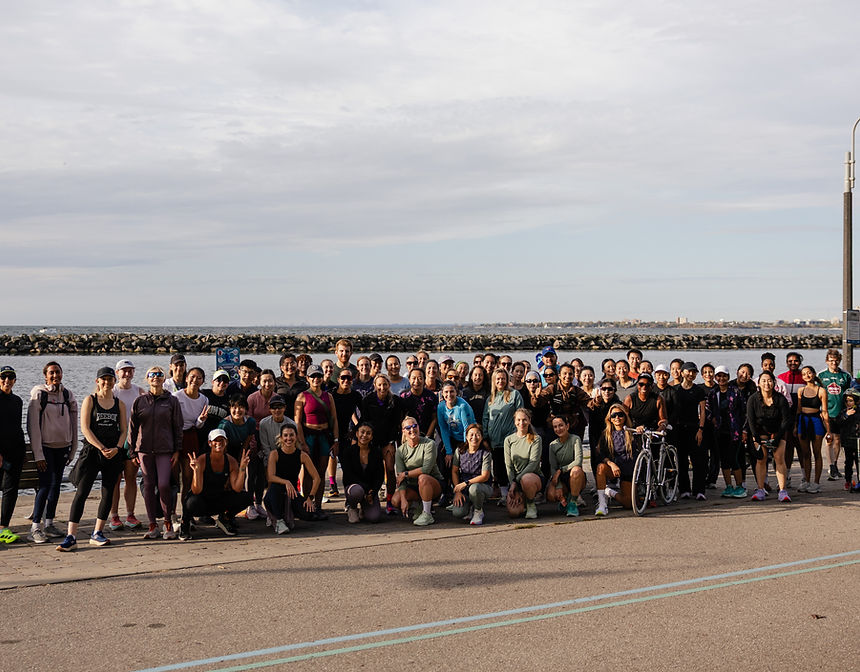
Every major shoe company makes great sneakers. It’s almost 2026 and we understand that foam is bouncy and shoes are light and pretty and some even have a carbon-plate to aid in responsiveness. These are table stakes if you want to sell shoes. But showing up in the community—sponsoring races and run clubs and doing things that actually improve the sport, not just sell it stuff—is what differentiates certain companies. According to iRun readers, no brand does this like ASICS, winner of consecutive back-to-back Brand of the year Golden Sneaker awards. Their work with the TCS Toronto Waterfront Marathon has elevated that Canadian race to levels usually reserved for Boston and New York and their efforts to incorporate mental health into training plans has quite simply changed lives. This year, their worthwhile endeavour to get more women marathoning was so successful in Toronto, that Calgary is running a similar program this spring. That’s real change. Real commitment. So, yeah: ASICS makes great sneakers. But they also care about runners. They care about things like community, keeping women in sports and the environment. That’s why, we believe, they’ve won iRun Nation’s Running Shoe Brand of the Year.
Running Shoe Model of the Year: Gel-Nimbus, ASICS
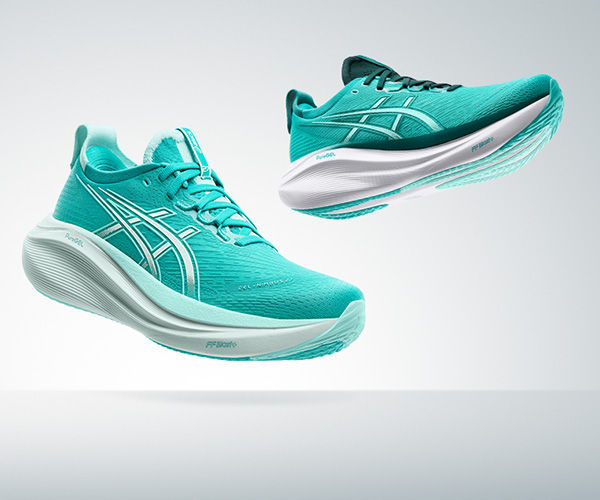
The twenty-seventh iteration of an ASICS classic is an update that doesn’t alienate fans of the comfortable training shoe while making slight improvements from the toebox to the heel. Soft and smooth yet responsive and fast, the affordable, neutral trainer is exactly the workhorse all runners need in their training rotation. No wonder it’s your Running Shoe Model of the Year.
Second Place: Saucony Endorphin
Third Place: New Balance 1080
Medal of the Year: Tamarack Ottawa Race Weekend

The country’s largest running weekend has pressure thrust upon it that other races don’t feel: when they make medals, they need to make tonnes. It’s always a treat seeing what the nation’s capital comes up with and this year our readers fawned. Gold, bright, powerful and impressive: you race Ottawa, you come home with something that shows the world what you earned. Congratulations, Tamarack Ottawa Race Weekend, producers of our Medal of the Year.
Favourite Race Shirt: TCS Toronto Waterfront Marathon

The Waterfront Marathon did a lot of things right this year—from the expo to the smiles on the faces of the volunteers. But runners love their race shirts and, across Canada, our readers agreed on one thing: the fashionistas in Toronto know how to do shirts. Last year, Emily May Rose did things with raccoons to create an instant classic. This year, Durothethird gave runners a thrill. What will be on the shirts next year in Toronto? Only time will tell but our readers gave this year’s iteration the top prize for the Race Shirt of the Year.
Running Watch Brand of the Year: Garmin

Giving Garmin the award for Running Watch of the Year is a little like giving water the prize for best beverage: Garmin is as synonymous with our sport as bananas and chafing. While the world adapts to the prevalence of running and Google and Apple make watches that some runners use, Garmin—with most of its technology made in Alberta—remains the gold standard for running watches. In the second consecutive year, the readers of iRun select Garmin as your Watch Brand of the Year.
Runner of the Year: Natasha Wodak

Canada’s all-time fastest female marathon runner smokes all other runners in popularity and speed. We spoke with the in-demand women’s race coach from her home in Vancouver.
Ben Kaplan: Tash, you win this thing every year. What do you make of your connection with runners?
Natasha Wodak: Well, thank you!!! I am honored! I think maybe it's that I’m pretty relatable? I keep it real on social media and don’t just post the “good stuff.” Especially this year having struggles finding my running groove again. So many runners know what it's like to lose their “running mojo.”
BK: Obviously you had a good year, winning Bazan Bay with a 16:01 5K and racing the World Championships in Tokyo. But I think it’s your openness like onstage at the Comedy Club at the Waterfront Marathon that people applaud as much as your finishing kick. What do you make of your 2025 season?
NW: There were some great races, for sure, but overall it wasn’t my best year. I had my first ever DNF in the Nagoya Marathon, which was a tough one for me. I went into that race really fit and was so frustrated and disappointed when it didn’t go well. And after having quite a few sub-par marathons over the last few years, I was left feeling pretty un-confident in the spring. I had to take a bit of a break to let my mind and body re-set before my marathon build for Worlds. My body never really came around the way I had hoped, but I got my joy back in training and competing, so that’s the real win of 2025.
BK: Amen.
NW: I soaked in the experience of being on the World’s team, and ran my heart out on the streets of Tokyo.
BK: What were three highlights from your running year that you’ll think about over the holidays?
NW: The. World’s Marathon, and high-fiving my parents at 20K, winning Canadian Half Marathon Champs. The best I felt in a race in 2025., and sunny long runs in Glen Valley with Jim and Mary biking with me.
BK: I can’t let you go without asking for a tip for our own longevity. You’ve been doing this since you were 13. How—with running—do you remain in love?
NW: Oh Ben…me and running have had our share of troubles in paradise. I think this year taught me that you really can’t force it. You need to take a step back sometimes. And the love will return.


.jpg)
The Case for Naked Running
The Running Physio, Lauren Roberts, program director at Athlete’s Care, on What Happens When You Leave the Tech at Home
If you run in Canada, you know the ritual: the watch charges overnight, the playlist downloads, the route is mapped, and the pace goals are set before you even lace up. For many of us, GPS has become the real running partner—steady, reliable, and sometimes bossy. But what happens when you run without it? No splits. No pace alerts. No data to upload. Just you, your breath, and the pavement. Welcome to naked running - a growing trend that asks runners to ditch the tech and reconnect with what their body is doing, not what their screen says.
We’re a data-driven generation. Garmin, Strava, and every running app on the planet have trained us to chase metrics like they matter more than the run itself. But many runners (including elites) are stepping back and asking: Is all this data making me better or just more anxious? Dropping the tech can create a surprising sense of freedom. Without constant feedback, runners report feeling less pressure to perform and more willing to tune into effort, mood, and terrain. Instead of running to hit a number, you run because you want to.
And in a city like Toronto—where you can go from the Martin Goodman Trail to the Don Valley trails in minutes—there’s something grounding about actually feeling your surroundings without the background of beeps and buzzes.
Why Runners Are Going Naked

Listening to Your Body Is a Skill (And We’re Losing It)
When you run naked, you start to notice things you usually ignore: how your breathing changes on a long steady climb, whether your stride feels light or heavy, or when your body is telling you it’s time to push or pull back. This internal pacing system—often known as the Rate of Perceived Exertion (RPE)—is a runner’s sixth sense. But it needs practice. The more we outsource pacing to technology, the duller that sense becomes. Running without GPS helps retrain your ability to:
Feel instead
of measure your effort
Notice early signs of fatigue or niggles
Stay present instead of worrying about whether your pace is “good enough”
Develop pacing instincts that translate to race day—even with a watch
When you run naked, you start to notice things you usually ignore: how your breathing changes on a long steady climb, whether your stride feels light or heavy, or when your body is telling you it’s time to push or pull back. This internal pacing system—often known as the Rate of Perceived Exertion (RPE)—is a runner’s sixth sense. But it needs practice. The more we outsource pacing to technology, the duller that sense becomes.
The Mental Benefits Are Real
There’s something inherently meditative about a tech-free run. Without the constant checking, comparing, or judging, many runners report:
Less performance anxiety
More relaxed runs
Better flow state
A stronger sense of enjoyment
Your run becomes more about the experience and less about the outcome. It’s the difference between asking “How fast did I go?” and “How did that feel?” One connects you to the sport; the other connects you to yourself.
Surprisingly—yes, for some runners. When you learn to pace by feel, you stop burning matches early. You run more consistently. You shift your focus to mechanics, breathing, and rhythm. You develop a natural sense of your gears. Even some elites use it regularly to prevent over-training and keep their intuition sharp. Many coaches recommend naked running for:
Can Naked Running Make You Faster?
Recovery runs
Long runs
Early base-building phases
Returning from injury
Mental reset weeks
How to Start (Without Panic)
If the thought of running without a watch gives you heart palpitations, you’re not alone. Believe it or not, your run counts even not on Strava. If you’re really losing it, you can upload it manually after (without the gps file). You might be surprised by how good your running feels when it’s not being graded. Start with something simple:
Run a familiar route where distance doesn’t matter
Cover the watch face with tape
Turn off pace alerts
Try one naked run a week
End with a few minutes of reflection: How did that feel? What did I notice?
We have route variety, soft-surface trails, low-pressure park loops, and epic waterfront stretches that demand to be felt, not measured. Naked running is easier when the environment is worth paying attention to—and Toronto’s running landscape delivers.
Try:
Toronto Is the Perfect Naked-Running City
The High Park trails
Taylor Creek
Humber River loops
Mt. Pleasant Cemetery’s quiet roads
The beaches boardwalk at sunrise
The Takeaway
Technology can make running better. But it can also make it noisier. Naked running isn’t about rejecting data, it’s about remembering you don’t need it to run well. Sometimes the simplest way to improve your running is to take everything off. Except your clothes.
Lauren Roberts has trained the staff at Athlete’s Care with her running program. To find the Athlete’s Care location closest to you, see athletescare.com


A delicious, holiday-inspired tray bake that’s loaded with protein and seasonal vegetables, and comes together easily with minimal prep and cleanup. This family-favourite is the perfect weeknight dinner that satisfies taste buds and your festive spirit! By Ruth Burrowes
Festive Sweet Potato Turkey Bake
FOOD
Ingredients
-
1 lb (450 g) ground turkey
-
3 medium or 2 large sweet potatoes, peeled and diced into ½-inch cubes
-
1/2 medium red onion, finely chopped
-
1 cup kale, chopped
-
½ cup unsweetened dried cranberries.
Spices & Aromatics
-
2 tbsp olive oil
-
2 cloves minced
-
1 tsp onion powder
-
1 tsp smoked paprika
-
½ tsp ground cinnamon
-
¼ tsp ground allspice (optional)
-
1 tsp dried rosemary (or 1 tbsp fresh, chopped)
-
½ tsp black pepper
-
1 tsp salt
Finishing & Garnish
-
½ cup shredded mozzarella cheese
-
¼ cup chopped pecans
-
Optional: Fresh parsley, chopped, for garnish

Instructions:
-
Preheat oven to 425°F (220°C). Line a large sheet pan with parchment paper.
-
In a large bowl, toss sweet potato cubes and chopped onion with 2 tbsp olive oil, ½ tsp salt, ¼ tsp black pepper, ½ tsp cinnamon, ½ tsp smoked paprika, and ½ tsp rosemary
-
Spread in a single layer on the prepared sheet pan. Roast for 20 minutes, stirring halfway
-
While the sweet potatoes roast, in the same bowl, combine ground turkey with finely diced onion, minced garlic, onion powder, remaining paprika, allspice, rosemary, salt, and pepper. Mix well.
-
Remove sheet pan from oven after 15 minutes. Scatter the turkey mixture over partially roasted sweet potatoes.
-
Bake another 15-20 minutes until the turkey is fully cooked (internal temperature 165°F / 74°C).
-
Remove tray from oven, gently stir in chopped kale, dried cranberries, and pecans. Sprinkle shredded cheese over the top. Bake an additional 5-10 minutes until cheese is melted and slightly browned.
-
Remove from oven, sprinkle with fresh parsley, and serve warm.
DRINKS
Festive Mocktails for Runners
With the holidays approaching, there’s finally some time to sit back and enjoy good food, good drinks, and good company. But good drinks don’t have to mean spirit-forward creations. For those looking to limit their alcohol intake this holiday season, or for those looking to make drinks for the entire family, or for those who choose not to imbibe at all, we’ve tried a collection of non-alcoholic holiday drinks that are sure to gift your tastebuds. Check out our favourites. By Erica Commisso
For a cozy treat: Virgin mulled wine
Mix 250 mL of cranberry juice, the same amount of orange juice, and 250 mL of non-alcoholic red wine–we recommend Lautus Savvy Red–in a pan, and heat it until it’s just about boiling. Remove it from the heat. Add mulled wine spices like cinnamon sticks, star anise, whole cloves, and citrus peels into a sachet or tea bag, and then let them steep in the heated wine mixture for ten minutes. Remove the sachet or tea bag from the mixture, reheat the wine to boiling, and then stir in sugar. Pour it into glasses and add more cinnamon sticks or citrus peels for decoration.

For getting into the holiday spirit: Winter punch
Mix cranberry and apple juice to create a four-cup mixture, and then add a cup of orange juice. Add two more cups of cranberry juice, two cups of cold ginger ale, and a bottle of non-alcoholic cider, like Pommies, to the mix. Serve it on ice.

For a warm option: Warm tea and cider
Swap out a hot toddy for an alcohol-free version by boiling six cups of fresh apple cider, like Lake City Cider, in a pot with a teaspoon of pure vanilla extract. Reduce the heat so the cider is reduced to three cups, which should take 30 to 45 minutes. Remove it from the heat and add in English Breakfast tea bags and a lemon slice, and let them steep for five minutes. Remove the tea bags and serve the drink warm.

For keeping it slushy: Frozen cherry soda slushies
Freeze Boylan’s black cherry soda in ice cube trays. Pour the frozen cubes, lime juice and frozen pitted cherries into a blender, and then blend it for 1 to 2 minutes. Pour it into glasses and then garnish it with a lime wheel.

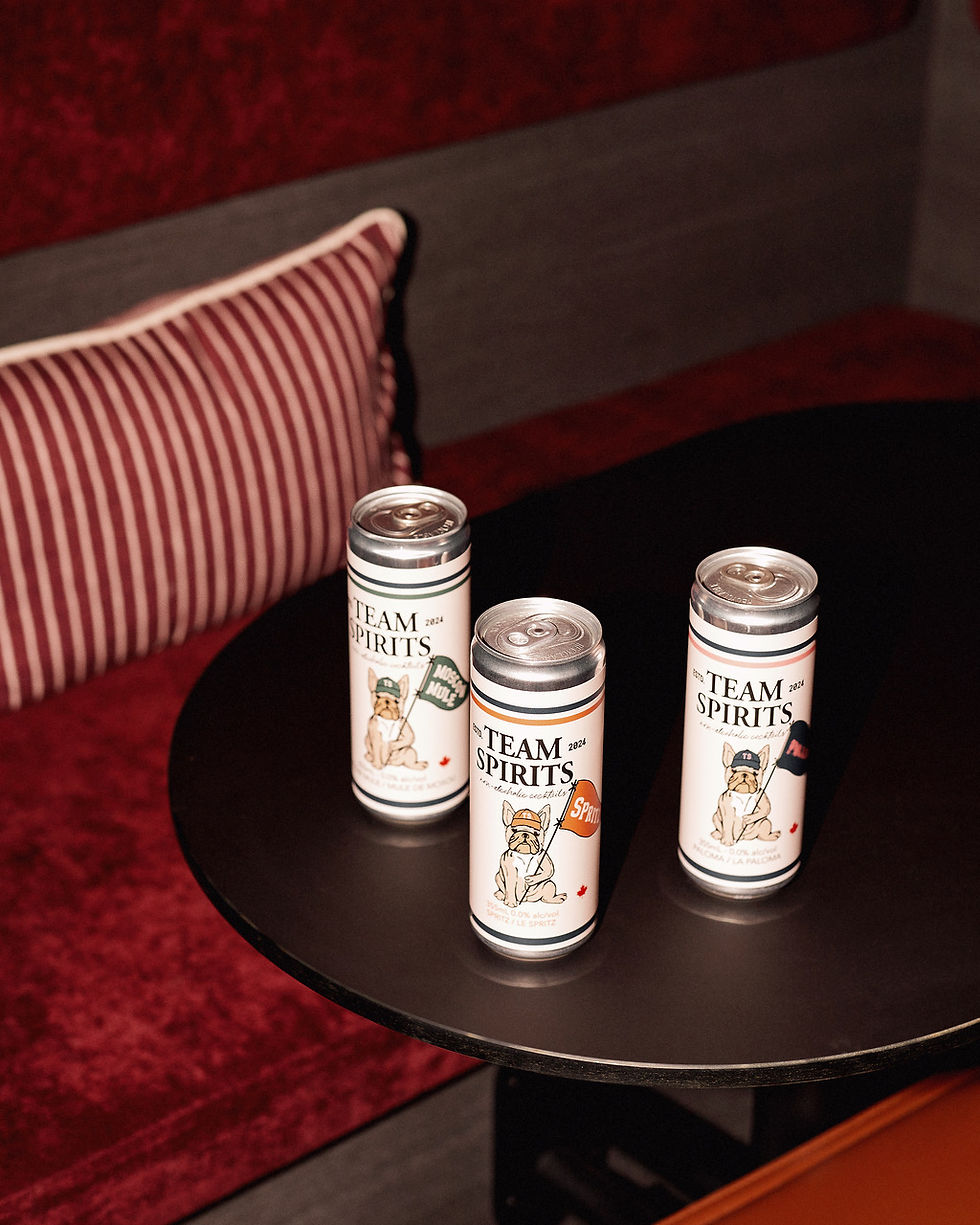
For a premade option: Team Spirits
Crafted by a father-daughter duo in Whitby, Ontario, Team Spirits offers spirit-free palomas, mules and spritzes. The premium mocktails are inspired by Jordan Quinn’s own journey with her sobriety, and she and her father use natural, high-quality ingredients in each can.
.jpeg)

One Race Series, Three Locations, Four Distances
Running the Endurance Event Productions “local destination” race series took me new places and earned me a couple of PBs
By Bridget Keroglidis
I had planned a Georgina Double for 2025: the Spring Fling Half in May and the full marathon in the fall. The timing lined up perfectly with my Boston-Qualifier goal—and at the time it was even a double qualifier. I was offered the chance to be an ambassador for both Georgina races plus two others in the series: the Kawartha Sun Run and the Oakville Half. It was a timely opportunity for something different, yet local. All four races were close enough for a day trip, with the option of a mini-getaway. The races have the local feel of a small race, but are seamlessly organized, with convenient bib pick-up in Toronto and the GTA.
I ran the Georgina Spring Fling Half in May to preview the course ahead of the full. From Toronto, the drive is about 45 minutes, but unless you secure VIP parking (which sells out fast), leave time to shuttle or warm-up from the parking lots and line up for the washrooms. The course is advertised as flat, fast, and scenic; my Strava shows just 23m of elevation gain. The half and full had three corrals and plenty of pacers. Outside the start/finish and a few key spots, the course is quiet, but stunning lake views make a great backdrop for the free race photos!
June brought the inaugural Kawartha Sun Run in friendly Fenelon Falls, and one of the year’s first heat waves. Credit to the organizers for quickly adjusting the half marathon course to be shadier and better supported. The change lengthened the half-marathon distance slightly, but the on-course ice bags and cold towels at the finish were elite. I ran the flat, scenic 10K. It was a long drive for a day trip and would be better as a mini-getaway.


September’s Georgina Marathon weekend delivered ideal conditions despite the lingering heat and humidity of the month. The marathon is a double out-and-back, which makes it surprisingly easy to compartmentalize mentally. The second loop is quiet, but well-placed cheer stations keep the energy flowing. The course is certified, though the Boston double-qualifying window no longer exists. My friends and I stayed nearby, giving the weekend a destination-race feel, and marathon magic delivered several PBs.
To wrap up my season, I chased the family 5K PB at the Nutrience Oakville 21.1. I parked within warm-up distance to avoid shuttle crowds and lined up near the front of the single corral, surrounded by speedy run-club singlets, high-schoolers, and first-timers. This was also a flat and fast course. I went out too hot, but managed to reclaim the family PB from my kiddo (at least until his next 5K). Cheering the 10K and half after, I learned their courses were hillier than the 5K.
I thoroughly enjoyed each race. The courses were well supported, PB friendly, the volunteers welcoming, and the destinations scenic. For more information, please click here.
.jpg)
TRASHED!
Runners have been producing a growing amount of waste at races in recent years, leading to environmental damage, writes Enid Kohler. We can do better.
It was sunny and 15 degrees, but the road looked like it was covered in snow. As I ran through downtown Montreal at the Montreal Béneva Half Marathon in September, hundreds of white paper cone cups littered the street, accumulating at a fierce rate. Runners to my left and right hurriedly grabbed water from volunteers before throwing them to the ground. I gingerly ran over the cups, taking care not to trip. It was my first half-marathon, so I was surprised by the amount of litter left on the wayside during the race. But for Canadian race directors across the country, a concern with waste management at large-scale running races is nothing new.


The Environmental Cost of Littering on Race Day
Eric Chéné, Race Director of Vancouver International Marathon Society, has noticed a spike in litter produced during running races over the past few years. Chéné is particularly concerned with gel packages discarded on race courses, telling me that the portable energy gels are his team’s “biggest problem.” Although designated waste stations are placed nearly every kilometre on the Vancouver Marathon and Half Marathon courses, many runners discard gel packets at random, often ending up in the forest or along the seawall.
The Vancouver Half Marathon has been running for 35 years, but last year, Chéné saw the “most gels discarded on course, ever.” Part of this may be related to a surge in new runners, who Chéné thinks may not know the proper etiquette of waste disposal during races. “It’s a great problem for us to have,” Chéné says, acknowledging the excitement of younger runners picking up the sport. But misunderstanding running etiquette can also exacerbate the environmental costs of racing.
Chéné tells me it is particularly troublesome when waste is disposed of away from designated water or waste stations, as it becomes exceedingly challenging for waste management teams to clean up. He recalls how one waste management leader “was almost in tears” when he saw the number of gel packages dispersed in the forest. It’s not just gel packages that are the problem. Even among spectators, Chéné has noticed a worrisome trend of discarding coffee cups at random. “We’re spending hours after the race picking up items that we didn’t even give out,” Chéné says.
Jen Cerullo, Manager of Environment, Social, and Governance with Canada Running Series— the nation’s premier running circuit, attracting over 60,000 participants at races annually—is also concerned with littering at running events. Cerullo tells me that it is increasingly difficult to keep races clean when athletes drop cups, gel packets and nutrition wrappers along a 42-kilometre route. “There’s a lot of athletes that treat the roads like waste bins,” she says.
Not for a Lack of Trying: Ramping-Up Waste Management Practices
Large amounts of litter at running races does not mean organizers are failing to implement adequate waste management practices. Quite the opposite, Chéné tells me that his team has increased their clean-up efforts in recent years, spending nearly $40,000 on waste management in 2024. His team uses a five-layer approach, collaborating with a team of City of Vancouver street sweepers, third-party organizations like Green Chair Recycling and Super Save, and sweep walkers to remove discarded packaging along the race, alongside a team of 1,800 volunteers on race day.
Cerullo has also increased waste management practices with Canada Running Series, with the ultimate goal of producing a zero waste event (when 90% or more waste is diverted out of landfills). But when runners fail to take responsibility for their waste management, it is challenging to have environmentally sustainable races. Chéné says that disrespect for the environment during races is “giving runners a bad reputation.” At races, Chéné tells me, “you are representing the entire running community, not just yourself.”


A Solution to the Problem: The Power of Reusables
There are several ways to make running events more sustainable. Reusable products play an important role. Emily Alfred, Senior Waste Campaigner at the Toronto Environmental Alliance, advocates for zero waste policies and programs in Canada. She says that major sporting events can create “gigantic amounts of waste,” but they can also be catalysts for a shift toward reusables on a national level.
Single-use items, even recyclable or compostable items, often have enormous environmental costs, Alfred explains. For one, compostable packaging is often not compostable in most commercial or municipal compost programs. Recyclable items like single-use foodware are also typically contaminated with small amounts of food, making it challenging to recycle properly. And even if single-use items are recycled or composted, they come with a large upstream footprint. Alfred tells me that plastic production involves high environmental costs, involving pollution from oil extraction and transportation before it arrives at the user. “Single-use itself is a problem,” Alfred says.
Advocating for reusables at large sporting events has the capacity to avoid millions of disposable items going into landfill. Accordingly, Alfred says that sporting events can be a turning point to get athletes and fans excited about reuse.
Some race organizers in Canada have already begun to implement reusables at their events. In North Kawartha, Ontario, the Middle Path Ultra and Trail Race is paving the way for sustainable running races. Race Director Darl Sutherland said that environmental sustainability is a top priority for the Middle Path Race, held every August at Kawartha Nordic.
This year, the race produced only one and a half bags of garbage. Food was composted into two bins, with leftovers donated to a local food shelter. Sutherland even gave out prizes to runners who recycled or picked up garbage they spotted in the forest. “We put more onus on the runners themselves,” Sutherland tells me. Runners bring their own dishware, and Sutherland hands out “hydro cups,” foldable cups that are “good forever.” All the materials used during the race, including the flags that dot the 52-kilometre course, are reused each year, and Sutherland donates his equipment to other local races to reduce environmental and economic costs for other race organizers.
“Everybody seems to be really on board,” he says. He hopes these kinds of environmental practices catch on at other races across Canada.
Small Actions Make a Big Impact
On an individual level, runners can do a lot to contribute to a cleaner planet. Runners can start small by limiting littering at race events. “It’s as simple as using the old camping etiquette,” Chéné advises. “Whatever you bring in, carry out.” This can entail putting gel packets back in your shorts pocket rather than onto the road, or using reusable water bottles on race day.
As a runner, there is a personal and social responsibility to implement sustainable practices, Cerullo says. “We’re really hoping that our runners will stand up for our community and help us do our jobs by keeping their waste on them.”
Cerullo acknowledges that the running industry also harms the environment by producing unsustainable products. But runners “drive corporate values through the choices and purchases we make,” Cerullo says. Purchasing reusable water bottles, re-using or donating running gear, and making responsible travel choices like carpooling on race day, can all make a difference.“Being sustainable isn’t always the most convenient option,” Cerullo says “But it does make a huge impact.”
Sport unites communities and has a tremendous ability to impact social change, Cerullo says. Much like running a marathon, working towards a more sustainable future takes patience and endurance. Of all people, runners know how to work slowly but surely towards a larger goal. It is time to start the marathon towards a healthier planet, together.


GIFT GUIDE

Gifts for Every Runner In Your Life
The perfect present, including plenty of Canadian picks, for all of your favourite runners–whether they’re a PB chaser or a newbie to the sport.
By Karen Kwan
For the food- motivated runner
Give your favourite active foodie inspiration in the kitchen, delicious sweets for carbing up or chef-crafted prepared meals for those days they’ve got no time to cook because marathon training is a full-time job.

Lidia’s The Art of Pasta by Lidia Matticchio Bastianich and Tania Bastianich Manuali (Penguin Random House of Canada), $45.

Eat Yourself Healthy by Jamie Oliver (Penguin Random House of Canada), $47.

Bread, Etc. by Matthew James Duffy (Penguin Random House of Canada), $50.

CookUnity meals, starting from $15.69/meal.

Purdys Himalayan Pink Salt Caramels, 18 pc, $30.

Psst: XACT has a new flavour coming soon! XACT Energy Bars, $63.
For the winter warrior
Winter conditions make keeping warm and staying well seen through these dark, frigid months almost even more important than hitting those pace targets.


Keep those ears toasty! Ciele GOCap FLTWND Ultra Iconic in Glade, $80.

Arc’teryx Women’s Liatris Jacket in Black, $800.

Reflective details and smart touch fingertips! New Balance Speed Lightweight Gloves, $34.99.

For the
shoe lover
“I have enough running shoes,” said no runner ever. That family member whose expansive running shoe collection could rival Carrie Bradshaw’s closet of Louboutins and Blahniks will love you forever if you surprise them with sneakers.

From the brand that designs for the female running experience. Hettas Alma Tempo in Icicle and Mock Orange, $238.

Adidas Adizero Boston 13, $190.


Saucony Endorphin Pro 4, $300.


Lightweight and responsive, propulsive and bouncy, few runners wouldn’t benefit from the Ekiden collection. ASICS Sonicblast, $230.
For the
tech fiend
Go for some hardware when it comes to that friend who can’t get enough of all of the insights and benefits these high-tech tools offer.

Featuring a built-in heart rate sensor. AirPods Pro 3, from $329.


Smart Ring, $39.99. winners.ca

The trail-loving ultra runner in your crew needs this in their gear stash. BioLite Dash 450 Rechargeable Headlamp, $79.95.

Conair Percussion Gun Massager, $149.99.
For the beauty products fans
Help the runners on your Christmas list get great race photos with a little help from some beauty and grooming essentials to add to their dopp kit.

Kaia Naturals The Chafe Relief Balm (50 mL), $27.

For that perfect slicked back ponytail for race day. Garnier Sleek & Shine Frizz Tamer, $12.99.

A luxury cleanser to make those post-run showers feel like a fancy spa. Aesop Citrus Melange Body Cleanser (500 mL), $65. aesop.com

Helps to boost your skin barrier and protect against environmental stressors. Byoma Balancing Face Mist (100 mL), $19.99.
For the
R&R pros
Recovery is as essential to training as getting your long runs done–these goods will get your favourite runner resting in style.


Runners can never own enough athleisure. Bandit Womens Stitch Logo Cropped Hoodie in Black, $172.


Saje Muscle Melt Comforting Coconut and Shea Body Butter (200 mL), $34.

Fazit Makeup Patches Gold Speckles (6 count), $24.99.

The Future of Marathons is Here
Marathon Runner Bill Quinn is a member of TCS’ Future of Business team, and he’s building the races of tomorrow
By Ben Kaplan
Interesting people come across my desk all the time as the editor of iRun but a chat with Bill Quinn, innovating at races like the TCS New York City Marathon and TCS Toronto Waterfront Marathon, and working with runners like Des Linden, isn’t something I’m likely to forget anytime soon. A marathon runner, tech expert, environmentalist and mountain biker based in Colorado, Quinn is a futurist with TCS, and exactly the person we want pioneering the next phase of our sport. I spoke with Quinn about what’s happening in running—next.
Ben Kaplan: You ran your first marathon in 2023. How’d that go?
Bill Quinn: Before that, I’d never run longer than 10K, but TCS had been working with Des Linden and we made a digital twin of her heart so thought it would be a fun experiment to also put one together for myself. I got a training watch, monitored my glucose, rest and recovery, and used AI to make a training plan, and ran the TCS New York City Marathon and really had a great time.
BK: Explain to me the concept of a heart “digital twin.”
BQ: Really it’s a means of acquiring data built around the larger concept of benefiting society because it takes measurements that are sharable with your doctor and can say, ‘This is what your heart will look like in three, ten or twenty years.’ TCS sees this as an opportunity to showcase technology with elite athletes that’s scalable and believes our work now is just the tip of the spear.
BK: I want a heart digital twin.
BQ: You can have one. And as the technology gets better, you can also have a digital twin of your brain.
BK: Make this stuff sound less scary. What’s all this technology mean for our sport?
BQ: It means the future of marathons will be safer, smarter and more sustainable.
BK: Somehow AI reflectively makes me cringe. Why do we want that in running?
BQ: AI is just a technology, but take one example: RunConcierge. It’s designed to be your local running chatbot. It’s a small-language model so, for instance, you want to run the Chicago Marathon. You can ask it: what’s the best way for me to get to the start line? My family wants bagels before the race, where should they go? They’re leveraging AI to be that local expert, like calling your buddy who lives in New York: where’s the best place to watch from on the course? RunConcierge uses AI to do that. I used it in the TCS Sydney Marathon and it helped me find the rail station from my hotel for the easiest trip to the start line.
.jpg)
BK: I know you’re not an AI apologist, but can you help me understand how you use AI to train?
BQ: I had wearable technology to measure glucose, monitor my rest and recovery, all the things. Well, I had lots of data, but what’s it mean? I used ChatGPT to interpret my numbers so if my training plan called for 21 kilometres, it could say, ‘You’ve had horrible eating and no sleep. I think you should dial back that 21K so as not to set back your training.’ It’s personalized data-based training as if from an all-knowing coach.
BK: It’s definitely cool, especially as we age and need all the help we can get to stay training.
BQ: First time I decided to run a marathon I was an active 54-year-old man, but didn’t exactly know how I should be training. The AI data gave me pace information based on 750,000 runners in my demographic and told me a pace I could crush based on my information. It can be overwhelming, but it’s also a powerful tool.
BK: What else are you brainiacs working on?
BQ: I love talking about biodegradable water spheres designed to help eliminate all the paper cups at races.
BK: I heard about this. That’s the Jetsons-sounding version of on-course water where instead of actually drinking water, we eat something that turns into water and leaves no trash on the course?
BQ: They’re spheres, and it’s technology that’s real, almost like jelly in a way. It’s chewable, biodegradable pods filled with water that you pop in your mouth and burst, almost like a water balloon, with no waste.
BK: The waste from the paper cups at races, gel wrappers too, it’s disgusting.
BQ: It would be cool if the membrane that held the water could also hold nutrition and carbohydrates. You have to remember that marathons require a lot of water; we’ve been working with the TCS Sydney Marathon on reducing that.
BK: We’ve innovated so much with shoes, since inventing the carbon-plate. It feels like we should be doing the same thing with water.
BQ: We are! There are real world prototypes and they were rolled them out in limited capacity at the TCS London Marathon last year.
BK: What’s trending now? What will the races of tomorrow bring?
BQ: Big races, Sydney in particular, are very sustainably focused.
BK: You were also telling me about innovations in pavement, like basically turning the roads into something offering energy return?
BQ: Piezoelectric energy is the buzz. It’s energy harvesting and it’s being worked on to deliver at scale, but basically the pressure from the foot strike causes the materials in the ground to come together and when the molecules crash into each other it creates electricity—electricity that goes back into the city grid.
BK: Marathon runners powering electricity in city blocks!
BQ: At small scale, you initiate it with timing mats. That’s a good first step. But fast forward into the future and have cities put this down on sidewalks, capturing energy all day long, and you reduce your carbon footprint and have a net positive energy return.
BK: TCS is looking at how we can bring these technologies to races, but I know the goal is to scale your technologies outside the sport.
BQ: It’s hard to scale early on in technology, but as the costs go down and technology improves, yeah—that’s the goal. We work in running, but we also work in the real world.
BK: I know I’m not the only one saying how great it is that TCS has taken an interest in our sport.
BQ: Marathons are a good showcase for our technology. Marathons create a mini-city ecosystem that happens for one day. We learn and figure out what works and it becomes a showcase for what can be used to benefit the broader public.
BK: This is how the sport should be showing up. Not trashing the streets that we run on, but powering the cities where we race.
BQ: We’re using marathons to enable technology and bring people together. Really, our only goal is to improve health and wellness across all of society—have all boats rise with the tide.

2025 in Running
BY THE NUMBERS
Finishers at the 2025 TCS New York City Marathon. The largest marathon of all-time.
59,226
Helen Obiri’s winning time. Setting a course record.
2:19:51
Number of women registered in 2025 to run the marathon at the TCS Toronto Waterfront Marathon
2,700
Increase from 2024 that number represents in women marathoners
23%
The global running shoe market size in 2024
$20,914,500,000
Number of the above figure spent on men’s running shoes
60%
Number of running shoes sold in North America and Europe, the two largest markets for sneakers
70%
Kilometres-per-hour Sawyer Nicholson, 14, averaged in winning the Ontario Provincial 5K Championships
3:21
Kilometres-per-hour in a 5K run by the average female runner
7:30
Average finishing time at the Ottawa Marathon
4:05:26
Approximate percentage of all marathoners who break the three-hour mark
2.65%
On Cloud Boom Strike LS’ list price
$420
Number of pairs of $420 On shoes available in Canada in men’s size 9.5
0

“Running makes me feel more human.”
Real talk with Nicholas Thompson, author of the Running Ground, the best running book in years
When my training partner got me The Running Ground by Nicholas Thompson for the holidays, he said that I would relate to nearly everything in the book. Thompson, a competitive marathoner and ultra-marathon runner, is the CEO of the Atlantic and writes eloquently in his book about running—but also about goal-setting, raising children and, especially, his complicated father. Ahead of the holidays, I spoke with Thompson over Zoom about his love for the sport, and how he continues finding joy in his shoes.
Ben Kaplan: My favourite line in your book, and there’s so many great bits, but I love when you write about how you worked just hard enough every year—to keep everything the same.
Nicholas Thompson: It was so mysterious to me! I knew so much about running, I thought about it all the time, and yet I didn’t actually do what would eventually become so obvious. There was no reason I shouldn’t run 2:25, but I just didn’t change enough to actually do it.
BK: Beyond running, I find it such a powerful metaphor: I want my life to be different, but I don’t actually do enough to make it that way.
NT: You have to do enough to change enough. Belief’s also involved. I didn’t think I could get any faster so I didn’t do enough—not really—to get me faster and it is a parable, for instance, for work: you do enough to do well in your job, but not enough to do better.
BK: My thing with getting much better at running is, at some point too much running, too much obsession, becomes maybe a net negative to my overall existence.
NT: Running can be a net negative. It takes up a lot of time, makes you selfish, makes you injured, makes your spouse hate you. . .
BK: Yes!
NT: No.
BK: How do you keep it in balance (which you have to do to keep it sustained)?
NT: Running makes me feel more human. I have an intense job in a congested city and running is a way to disconnect and feel something else. My kids asked me why I run and I said, “To get closer to God.” I said it pithily, but it’s also not not true.
BK: Running certainly means more when it’s about getting closer to God than losing ten pounds, quitting alcohol or qualifying for Boston which, I should add, are totally my 2026 goals.
NT: Running can be a spiritual release, but more simply it just creates habits. I run to maintain daily discipline and not follow in the footsteps of the way my father unraveled. Running helps you concentrate, and every time you do something hard or set an audacious goal, running makes it easier to do the next hard thing—in life, or when you run.
BK: I run a lot and have for a long time, but I’m awed by your dedication. Running at 10pm, or at 4am, and competing in 100-mile races.
NT: All the time I think about quitting but if you quit once, it makes it easier to quit the next time.
BK: Love that.
NT: Every single workout, you think about quitting. There’s always some point when you’re doing eight 1600-metre reps where you think, ‘What if I just do six?’ Every time I think that I push back on it—because if you shorten your workouts, you risk shortening everything.


_JPG.jpg)
BK: Why do you run?
NT: There’s a tension in it. It’s an act of discipline and it makes me more disciplined throughout my day. But more generally, I enjoy it. Running for me is like other people eating ice cream. If I didn’t have a goal, race or objective, I’d still run. Running’s always been a source of pleasure.
BK: How do you think it’s helped you in life?
NT: I’m friendly and easy to get along with, but I have an intensity and I care about succeeding, probably ingrained from my father. I have a high fear of failure and running, I think, helps mitigate these emotions.
BK: One thing I like about running is this notion that There’s No Finish Line. This is something Ed Whitlock told me. How running, God willing, goes on and on.
NT: There’s a finish line. At some point, you stop. I’m trying to figure out the last time I ran with my father. He wasn’t aware of the last time he ran and I probably also won’t know. I’m 50. Will I run past 75? I’d like to think so, but the body breaks down. There’s some kind of finish line. We just don’t know where it is.
BK: What advice would you give to runners looking to get more out of the sport this year?
NT: Meditate. Think about the birds. Don’t put on headphones and don’t pace yourself, just get a sense of your body doing something. It’s the quickest way to see how running can be a spiritual boost.
BK: I do think making running mean something is the surest way to improve your running. Like, not to get Buddhist, but you run faster when you stop thinking all the time about running faster.
NT: When running is more than something just to get through, or if you run to lose weight or meet some kind of external goal, that’s great. Running is a tool. But when you release your soul or your mind from your body, you can get to a deep place and I think that not only helps your running, but everything in life.
BK: How do we avoid burning out?
NT: Set new goals. If you’re running marathons and not getting faster—at some point you can’t—stop banging your head against a rock. Set interesting, weird goals. Break your 5K time or run up a mountain. Beat your friend Bob. People get burned out when they try to break four hours and run 4:02, 4:07, 4:12, 4:05. Don’t do that. Run a half in 1:45.
BK: The book’s about running, but it’s also about sons and dads. How did your dad set both good and bad examples?
NT: He set a good example on how to love, how to be interesting and how to explore the world. The streetlights in his head were never red. But he couldn’t cope with the pain of coming out late in life or of his friend killing himself in his garage. He couldn’t live up to the outrageous youthful expectations he set for himself, and couldn’t harness his demons.
BK: You’re a father and your kids, like your wife, play a big role in your book. How does running help you be a good husband and dad?
NT: This weekend, my two younger boys and I went out and raced each other up a little hill near our house. The 15-year-old is faster than me at sprints, he cooks me, but the 11-year-old I can take in a short sprint, so we worked out a little race: I had an 8 second head start on my eldest and he had to start turned around. I raced the 11-year-old straight-up. Anyways, we must’ve done this twenty times and I was so sore afterwards I could barely walk. It’s fun to beat your dad and I’m not embarrassed to lose.
BK: So what does it all mean?
NT: In the end, running serves my life because it’s fun.
The Running Ground by Nicholas Thompson, a best-seller, is out now. For more on Thompson, see NicholasThompson.com.
